Pulumi logo

Posts Tagged ai-agents

Better CLI Interactions for Agents and Humans
Better CLI Interactions for Agents and Humans

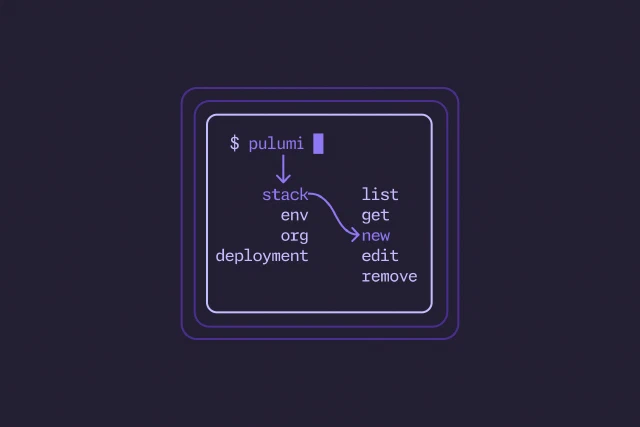
AI agents do a lot of their work through CLIs. They’re easier to call than HTTP APIs and they produce predictable output. Over the last few months our own CLI traffic has shifted from mostly people typing commands to people and agents running commands together, often in the same session.

Today we’re shipping a release built for both. The Pulumi CLI is reorganized around three ideas: the right command should be the one you can guess, anything you can do in Pulumi Cloud should also be doable from the terminal, and what comes back should be just as readable to an agent as it is to a person.


Read more →

How Building AI Agents Has Changed in 2026

How Building AI Agents Has Changed in 2026

Twelve months ago, building an AI agent meant picking a framework, defining your tools, standing up a RAG pipeline, and writing a stack of glue code to wire it all together. That was the default playbook. The post-mortem on six months of work usually went the same way: half the time went into infrastructure that had nothing to do with the agent’s actual job.

That isn’t where the work is anymore. Most of the middle layer is gone. The SDKs ship with the tools, the skills system replaced the upfront tool registry, and longer context windows pushed vector search out of the default slot it held all of last year.

The shape is the same as a lot of infrastructure shifts before it. The hard thing got cheap, the cheap thing got expected, and the question moved up a level.

Read more →

The Dark Factory Pattern for Infrastructure: Running Pulumi Lights-Out

The Dark Factory Pattern for Infrastructure: Running Pulumi Lights-Out

The original dark factory was Fanuc’s robotics plant in Oshino, Japan, where the lights are off because nobody is on the floor. Robots build robots. Parts move through the line for weeks at a time without a person walking past them.

The same pattern is now showing up in software. Three engineers at StrongDM shipped roughly 32,000 lines of production code without writing or reviewing any of it. Stripe’s “Minions” agent system merges over a thousand pull requests every week. In January, Dan Shapiro of Glowforge published a five-level autonomy ladder that landed cleanly enough to become the shorthand most people now use, and BCG put out a piece calling it the dark software factory.

Almost every public writeup so far is about application code. The harder question is what this looks like for infrastructure.

Read more →

Agent Sprawl Is Here. Your IaC Platform Is the Answer.

Agent Sprawl Is Here. Your IaC Platform Is the Answer.

Somewhere in your company right now, a developer is building an AI agent. Maybe it’s a release agent that cuts tags when tests pass. Maybe it’s a cost agent that shuts down idle EC2 overnight. It’s running, it’s in production, and there’s a decent chance the platform team doesn’t know it exists.

This isn’t a thought experiment. OutSystems just surveyed 1,900 IT leaders and the numbers are rough: 96% of enterprises run AI agents in production today, 94% say the sprawl is becoming a real security problem, and only 12% have any central way to manage it. Twelve percent. You can read the full report here.

The real question is where those agents run. Inside the platform you’ve already built, or somewhere off to the side where nobody on the platform team can see them.

Read more →

Superpowers, GSD, and GSTACK: Picking the Right Framework for Your Coding Agent

Superpowers, GSD, and GSTACK: Picking the Right Framework for Your Coding Agent

Three community frameworks have emerged that fix the specific ways AI coding agents break down on real projects. Superpowers enforces test-driven development. GSD prevents context rot. GSTACK adds role-based governance. All three started with Claude Code but now work across Cursor, Codex, Windsurf, Gemini CLI, and more.

Pulumi uses general-purpose programming languages to define infrastructure. TypeScript, Python, Go, C#, Java. Every framework that makes AI agents write better TypeScript also makes your pulumi up better. After spending a few weeks with each one, I have opinions about when to use which.

Read more →

How We Built Platybot: An AI-Powered Analytics Assistant

How We Built Platybot: An AI-Powered Analytics Assistant

Before Platybot, our #analytics Slack channel was a support queue. Every day, people from every team would ask questions: “Which customers use feature X?”, “What’s our ARR by plan type?”, “Do we have a report for template usage?” Our two-person data team was a bottleneck.

Read more →

The Claude Skills I Actually Use for DevOps

The Claude Skills I Actually Use for DevOps

When Claude Code first released skills, I ignored them. They looked like fancy prompts, another feature to add to the pile of things I would get around to learning eventually. Then I watched a few engineers demonstrate what skills actually do, and something clicked. By default, language models do not write good code. They write plausible code based on what they have read. Plausible code turns into bugs, horrible UX, and infrastructure that breaks at 3am.

Read more →

Pulumi Agent Skills: Best practices and more for AI coding assistants

AI coding assistants have transformed how developers write software, including infrastructure code. Tools like Claude Code, Cursor, and GitHub Copilot can generate code, explain complex systems, and automate tedious tasks. But when it comes to infrastructure, these tools often produce code that works but misses the mark on patterns that matter: proper secret handling, correct resource dependencies, idiomatic component structure, and the dozens of other details that separate working infrastructure from production-ready infrastructure.

Read more →

Encode What You Know With Neo: Custom Instructions and Slash Commands

Every organization builds up knowledge over time: naming standards, compliance requirements, patterns your team has settled on, and proven approaches to common tasks. Until now, bringing this knowledge into Neo meant repeating it manually each time - specifying preferences, describing how your team works, and recreating prompts that someone already perfected.

Two new features change this. Custom Instructions teach Neo your standards so it applies them automatically. Slash Commands capture proven prompts so anyone on your team can use them with a keystroke.

Read more →

The infrastructure as code platform for any cloud.